

Associate 21-10-2026
Hand Steadiness: The Forgotten Metric in Precision Sport
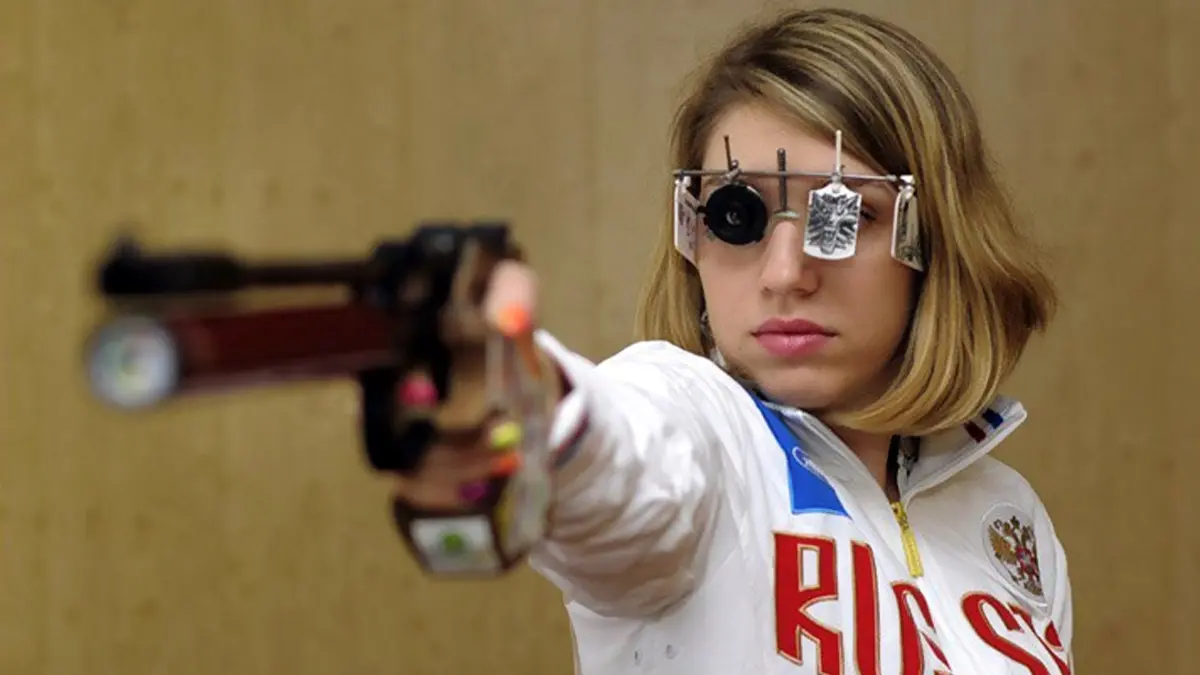
In the final of the 10-metre air pistol event at the 2020 Tokyo Olympics, Vitalina Batsarashkina stood with her pistol raised, waiting for the right moment to shoot. At that level of competition, even a tiny movement can affect the result. A shift of just a few millimetres at the point of aim can be enough to move a shot away from the centre of the target.
Batsarashkina won gold.
We often explain performances like this through things that are easy to see: technique, concentration, reaction time, or trigger control. But there is another factor working underneath all of them. It is much less visible, and it receives far less attention. Hand steadiness.
The Measurement Nobody Talks About
Precision sports are built around extremely small movements.
In shooting, it is the movement of the pistol before the trigger breaks. In archery, it is the stability of the bow and drawing arm. In darts, it is the control of the hand during the release. These movements may look almost effortless when performed by an elite athlete. They are not.
The body is constantly moving, even when an athlete appears to be completely still.
One example is postural tremor. This refers to the small involuntary movements that occur when a person tries to maintain a position against gravity. Everyone experiences some degree of tremor. It is a normal part of human physiology. The difference between athletes is partly a question of how much movement they produce and, more importantly, how effectively they control it.
This becomes particularly important in precision sports because the athlete cannot simply eliminate movement. The goal is to manage it.
A 2008 study in the Journal of Sports Sciences compared elite and pre-elite air pistol shooters using lightweight accelerometers attached to the pistol and upper limb. The researchers found that elite shooters generally had smaller tremor amplitudes, particularly in the distal parts of the arm.
There was another interesting difference. Elite shooters showed relatively less tremor from side to side than from up and down. They also had weaker coupling between lateral arm tremor and movement of the pistol. The relationship with performance was particularly clear for lateral tremor. Put simply, elite shooters were not completely still. They had learned to make their movement more manageable.
Why Side-to-Side Movement Matters
Imagine trying to aim at a target while your hand moves slightly up and down. You can observe that movement and, to some extent, anticipate it. The shooter can wait for the sights to pass through the desired position before allowing the shot to break. Side-to-side movement is harder to deal with. A small lateral movement can move the barrel away from the intended point of aim. The athlete has a much smaller window in which to release the shot accurately.
This is one reason the findings from the 2008 study are so interesting. Elite shooters appeared to decouple some of the lateral movement of the arm from the pistol. Their bodies still moved, but that movement was not transferred to the weapon in the same way.
It is a subtle form of motor control. The athlete is not simply becoming "steadier." They are learning how to control which movements reach the implement and which do not. Similar principles can be seen in other precision sports.
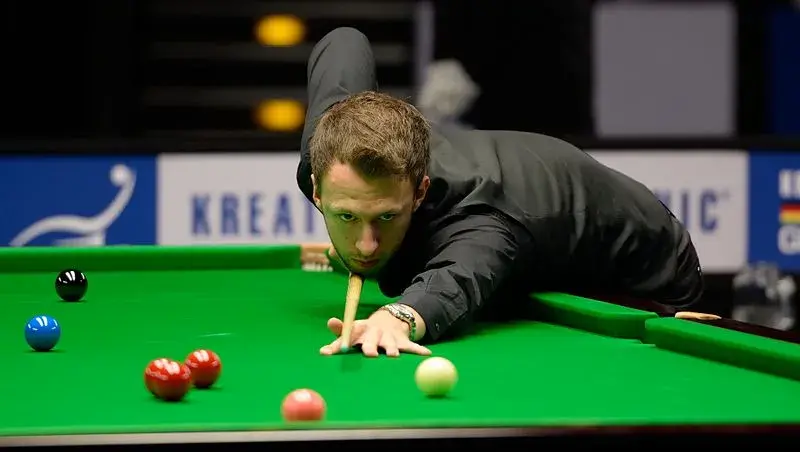
Research on billiards and snooker has found differences between expert and novice players in force control. Experts are better at limiting unnecessary forces in directions that do not contribute to the intended shot. The cue needs to travel along one particular line. Unwanted sideways force can interfere with that movement. The same basic principle applies to shooting: movement itself is unavoidable, but unnecessary movement can be controlled.
The Korean Model
South Korean archery provides an interesting example of what happens when this kind of control is developed over many years. South Korea has maintained an exceptionally strong record in international archery, supported by a highly structured training system. Athletes begin young and accumulate an enormous amount of practice.
Kim Je-deok, who won Olympic gold in Tokyo and later competed at the Paris Olympics, has spoken about shooting hundreds of arrows a day as a young athlete. By the time an athlete reaches the highest level, the number of repetitions can become difficult to comprehend. But repetition alone is not the whole story.
Korean archers are also exposed to conditions designed to make concentration and physical stability more difficult. Training has included shooting in darkness, in challenging environments, and in different weather conditions. The point is not simply to make the athlete stronger. It is to make their motor control less dependent on ideal conditions.
At the highest level, the athlete is not trying to create a perfectly controlled environment. They are learning to maintain control when the environment refuses to cooperate.
When Pressure Enters the Picture
There is a problem however: an athlete can be physically stable in training and still become noticeably less stable when the competition matters. Under pressure, heart rate increases. Breathing patterns can change. Muscular tension may increase. At the same time, the athlete becomes more aware of the consequences of every movement. A movement that would normally go unnoticed can suddenly feel enormous.
This is where mental training becomes relevant to hand steadiness. Psychological preparation does not replace physical preparation. Instead, it helps the athlete maintain the physical control they have already developed when the conditions become more demanding.
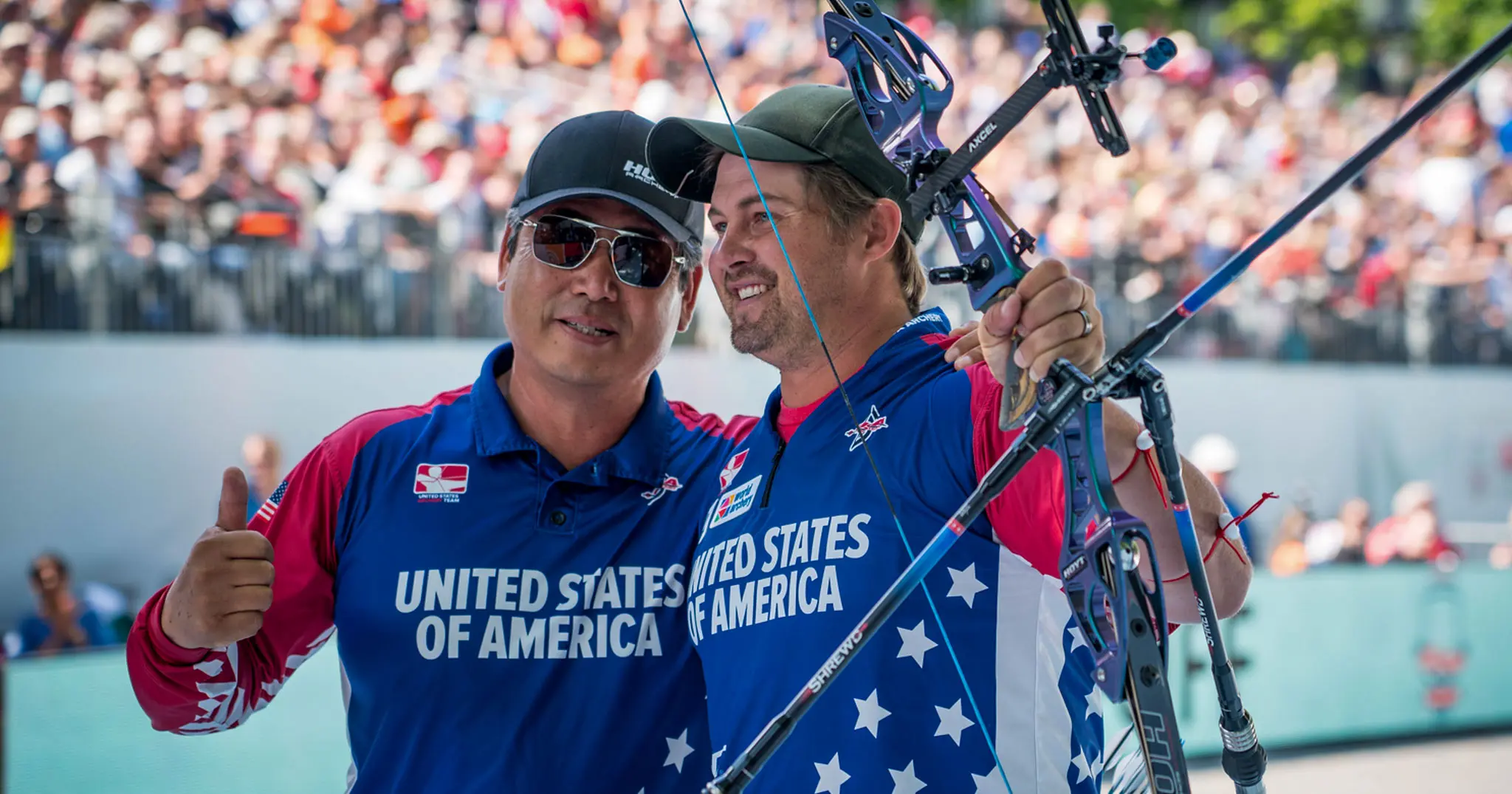
Archery coach Kisik Lee has emphasised the importance of mental preparation once an athlete has developed the necessary physical and technical abilities. His often-cited description of performance as becoming predominantly mental at the highest level reflects a broader principle in precision sport: once the basic physical skills are highly developed, controlling attention, arousal and emotional responses becomes increasingly important.
Mental skills can be difficult to measure compared with something like arrow placement or pistol movement. That may be one reason they are sometimes given less attention in training.
But the distinction between the "mental" and "physical" sides of performance is not always useful. An anxious athlete may grip the equipment differently. Changes in breathing can alter muscle tension. Increased arousal can affect fine motor control. A shift in attention can change the timing of a release. The mind and the motor system are constantly interacting.
Steadiness Is a Whole-System Skill
Perhaps the most useful way to think about hand steadiness is to stop thinking of it as a property of the hand alone. In a precision movement, stability begins much earlier. The feet provide the base. The legs and hips contribute to posture. The trunk provides stability. The shoulder positions the arm. The elbow and wrist control the final movement. The hand interacts with the equipment. A small instability anywhere along this chain can eventually appear at the point of release.
This does not mean that elite athletes become completely motionless. They do something more interesting: they learn to manage movement.
They reduce unnecessary tremor, control force, stabilise the relevant joints and maintain that control while dealing with fatigue, pressure and unpredictable conditions. That is what makes hand steadiness such an important, and often overlooked, component of precision sport.
The same principles extend beyond shooting and archery. Any activity that depends on fine motor control under pressure requires some combination of physical stability, neuromuscular control and psychological regulation.
At Sumona Wellness, this relationship between physical and mental performance is particularly relevant when working with athletes and performers. Training for steadiness can involve isometric strength, awareness of tremor and movement, and strategies for maintaining control under competitive pressure.
Sometimes the difference between a good performance and an exceptional one is not a bigger movement or a faster reaction. It is the movement that the athlete has learned not to make.
References
Tang, W. T., Zhang, W. Y., Huang, C. C., Young, M. S., & Hwang, I. S. (2008). Postural tremor and control of the upper limb in air pistol shooters. *Journal of Sports Sciences, 26*(14), 1579–1587.
Sung, K. et al. (2024). Upper limb muscle activation and hand tremor in elite and sub-elite air pistol shooters. *Sensors, 24*(8), 2438.
Chichkov, V. (2011). *Isometric training and pistol shooting*. USA Shooting.
Lee, K. (n.d.). *Mental training in archery*. Kisik Lee Online.